Measles is a highly contagious virus, which can be prevented through vaccination.
There is a measles outbreak in South-East Asia, especially in Vietnam. Several people from Melbourne have caught measles whilst visiting family or travelling in Vietnam. Public exposure sites linked to the recent measles cases have been identified, prompting a reminder about the importance of vaccination and vigilance when travelling abroad.
Measles can cause serious illness and can be potentially life-threatening. Up to a third of people with measles have complications and may need to go to hospital. Being vaccinated is the best way to prevent getting sick with measles or spreading it to other people.
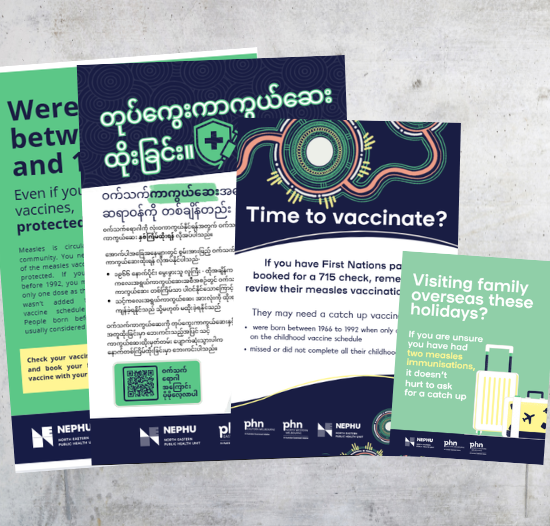
Anyone who was born after 1965 and has not had TWO measles vaccines is at risk of infection and should see their GP for a free measles vaccine, especially before overseas travel. Some pharmacies and local councils may also offer free vaccines.
The second measles dose was added to the National Immunisation Program Schedule in 1994. People born between 1966 to 1994 should check their vaccine history with your GP or the Medicare app that they have had a second catchup dose. If they are unsure of whether they have had two doses, they should get a vaccine as it is safe to have additional doses.
Children are recommended to be given a measles-containing vaccine at 12 and 18 months of age. Babies aged 6 to 12 months travelling to countries with measles outbreaks should get an extra measles vaccine before they go.
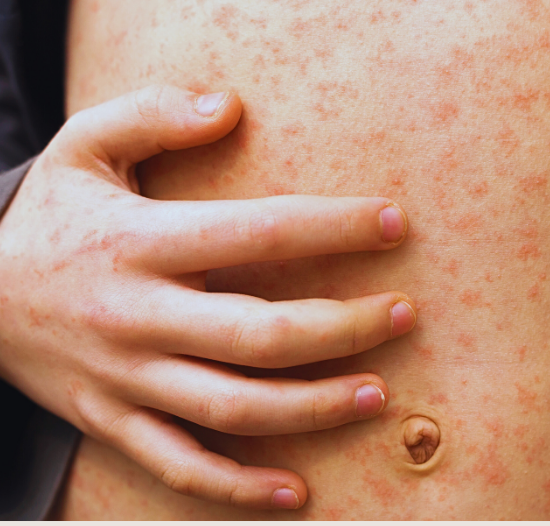
It is important to monitor for symptoms if you have been exposed to measles. Symptoms of measles include fever, runny nose, cough, red eyes, and a rash that typically starts on the face and spreads to the rest of the body.
People with symptoms of measles should seek urgent medical care. Call the clinic before attending and wear a mask to prevent spreading infection to others. Also consider measles if you develop symptoms after returning from travel to a country where measles is circulating (such as South-East Asia).
For health professionals
Suspected measles cases should be tested, advised to isolate (airborne precautions), and MUST be notified immediately to the Department of Health by calling 1300 651 160.
Clinicians should obtain both a throat swab for PCR and a serum sample for serology. PCR on urine can also increase the likelihood of virus detection. Mark as ‘urgent – send to Victorian Infectious Diseases Reference Laboratory (VIDRL)’.
During the notification call, the local public health unit (such as NEPHU) will give pre-approval for the testing cost to be covered by the Department of Health and will advise if samples can be sent via your normal pathology provider, or if the local public health unit will arrange a dedicated courier to VIDRL. Please note that PCR testing for measles is not Medicare funded, meaning patients will incur an out-of-pocket fee for testing unless the testing is pre-approved.