Vaccination is the most effective way to protect against winter respiratory viruses, including influenza, respiratory syncytial virus (RSV) and COVID-19.
This article provides an overview of winter respiratory virus vaccines available (including new vaccines), their funding, and eligibility criteria.
NEPHU recently hosted a online webinar to support clinicians and healthcare providers get ready for the 2026 winter vaccination season and learn more about new vaccination updates.
Influenza
Influenza vaccination reduces the severity of influenza-related illness and risk of influenza-related hospitalisations and deaths.
Influenza vaccination is recommended for everyone aged 6 months and above. Free influenza vaccines are available for National Immunisation Program (NIP) for:
- children aged > 6 months to < 5 years
- pregnant women
- Aboriginal and Torres Strait Islander peoples aged > 6 months
- people aged > 6 months with specific high-risk medical conditions
Different influenza vaccines are registered for use in different age groups; ensure the right vaccine and right dose.
Intranasally administered live attenuated influenza vaccine (LAIV; FluMist®) is now available for children aged 2–17 years.
- LAIV is as effectiveness to inactivated influenza vaccines and are just as safe
- LAIV has been used in the United Kingdom’s annual childhood flu program since 2013.
- LAIV is available on private market in Victoria
- LAIV is contraindicated for people who are moderately or severely immunocompromised, or using salicylate therapy.
Adjuvanted influenza vaccine (Fluad®) now available to > 50 year olds. Fluad® contains an adjuvant which helps boost the immune response to the vaccine in older persons. Fluad® is NIP funded for people aged > 65 years and available on the private market for people aged 50-64 year olds.
In 2026, the age for the two-dose recommendation when receiving the influenza vaccine for the first time has been reduced. A primary course of two doses (given 4 weeks apart) is recommended for children receiving the vaccine for the first time who are:
- Aged 6 months to <2 years.
- Aged 6 months to <9 years with a medical risk condition.
Influenza vaccines are trivalent in 2026. All influenza vaccines in 2026 are trivalent. The B/Yamagata lineage strain has not circulated globally since 2020 and has been removed.
RSV
RSV is the leading cause of hospitalization for infants and a significant cause of severe illness in older adults.
- From 15 May 2026, RSV vaccination (Arexvy®) will be funded through the NIP for all adults aged 75 years and over, and Aboriginal and Torres Strait Islander people aged 60 years and over . RSV vaccines (Arexvy® or Abrysvo®) are recommended (but not funded) for people aged 60 to 74 years with medical risk factors for severe RSV disease.
- The maternal RSV vaccine (Abrysvo®) is free under the NIP and is recommended at 28–36 weeks gestation for every pregnancy. Abrysvo® can be administered at the same time as other vaccines (i.e. pertussis and influenza).
- Nirsevimab, a long-acting monoclonal antibody, is funded by the Victorian Government for eligible infants and young children during the RSV season (mid-March to September).
- Nirsevimab is recommended at birth if the mother did not receive the RSV vaccine at least 2 weeks before birth, and for Aboriginal and Torres Strait Islander children and children with medical conditions associated with increased risk of severe RSV disease up to 24 months of age.
COVID-19
Older persons and people with medical conditions are most at risk of severe COVID-19 disease
- People aged > 75 years are recommended to have a booster every 6 months, while adults aged 65 to 74 are recommended a booster every 12 months.
- People aged 18 to 64 years with severe immunocompromise are recommended a booster every 12 months.
- People aged 18 to 64 years without severe immunocompromise can consider a booster every 12 months.
All COVID-19 vaccinations are free to all people in Australia, including those without a Medicare card
Check if up to date with other vaccines
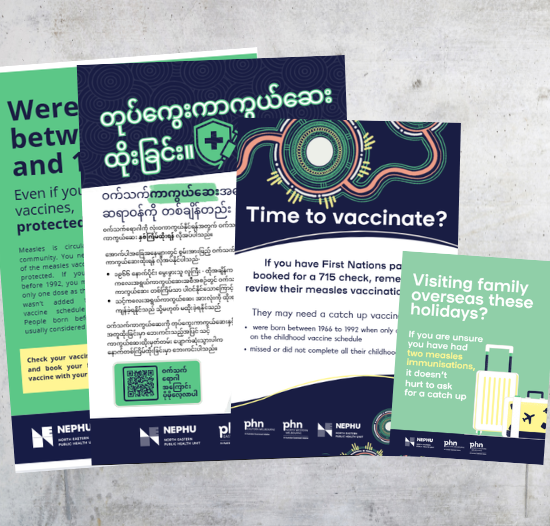
Be sure to check for TWO measles vaccines!
Measles remains a global threat and Victoria continues to be at risk of measles outbreaks. Two doses of a measles-containing vaccine are required for immunity. Adults, particularly those born between 1966 and 1992, may have received only one childhood dose. It is safe to give another MMR vaccine if a person has lost their childhood vaccine record. People born during or before 1966 are considered to have natural immunity and do not need to be vaccinated. MMR can be co-administered with other vaccines. The live-attenuated MMR vaccine is not recommended during pregnancy or for individuals with severe immunocompromise.
Also check vaccination status to other vaccine-preventable respiratory illness such as pneumococcal and pertussis.