Pertussis (whooping cough) is a bacterial infection of the airways and lungs that causes severe coughing.
Whooping cough is very contagious and can spread to others. Babies under six months of age are most at risk of serious illness.
Early diagnosis and treatment of whooping cough are important, and this helps to reduce the risk of spread to babies. Spread is reduced by antibiotics and by infectious cases not attending school, childcare and healthcare settings. The sooner these interventions can be initiated, the more effective in reducing spread.
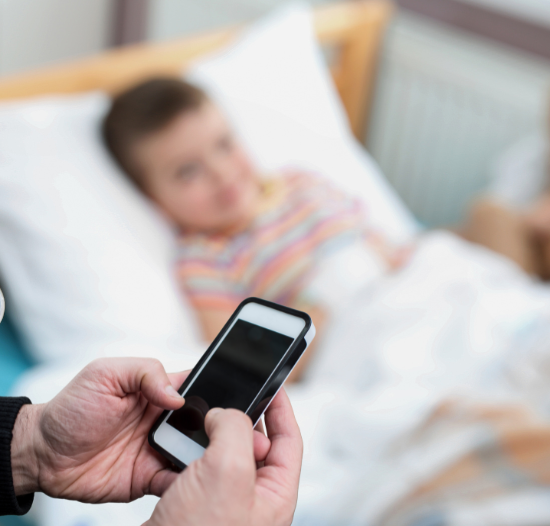
To speed up the communication of this important information, the North Eastern Public Health Unit (NEPHU) will send a text message to people living in north eastern Melbourne who have received a positive test result for whooping cough. This will allow people who have tested positive to receive this result more quickly, and provide earlier advice around how to prevent the spread of whooping cough.
The text message was developed with input from the community and general practitioners.
If you require further information or have questions about this initiative, please see the following Frequently Asked Questions or email [email protected].
Frequently Asked Questions
Why have I been sent a text message about whooping cough?
You have received this text message as your phone number was provided as the contact for a person who has been tested for whooping cough. The name of the person who has tested positive for whooping cough is provided at the start of the text message. The test result has been shared with NEPHU as a requirement of the Victorian Public Health and Wellbeing Act 2008.
How can I provide feedback on the text message?
As part of the pilot phase, people who receive the text message will be invited to provide feedback via an online survey approximately 3 weeks after the diagnosis. Feedback can also be provided by emailing [email protected].
Will I also receive a phone call?
Most people will not receive a phone call, but for any clinical questions please contact your GP. Only certain people at higher risk will be contacted by NEPHU by phone in addition to the text message. If you don’t receive a phone call but have any questions related to the text message, please email [email protected].
How will my privacy be protected?
Any information you provide is for the purpose of investigating the cause of your illness and preventing further cases.
All information is confidential and protected by legislation; it is only shared where necessary with authorised relevant parties.
For further information on NEPHU’s Health Protection data privacy policy, please click here.
Where can I find more information about whooping cough?
For more information, please see:
For Clinicians
Pertussis is a routine notifiable condition and must be notified within 5 days of diagnosis. Clinicians can notify using the online notification form. Please let your patients know when you are testing them for notifiable conditions and that public health teams may be in contact with them if the result is positive.
To prevent the onward transmission to vulnerable population groups, clinicians are recommended to:
- Commence antibiotic treatment if appropriate. For antibiotic treatment recommendations refer to the Therapeutic guidelines: antibiotic or the Royal Children’s Hospital Melbourne Clinical Practice Guidelines.
- Advise patients to avoid contact with infants and women in the last month of pregnancy while infectious
- Advise that children with pertussis must be excluded from primary school or children’s services for 21 days after the onset of cough or until they have completed 5 days of a course of antibiotic treatment. Older children and adults are also recommended to avoid school or work for the same period of time.
- Complete contact tracing and management (see Royal Children’s Hospital Melbourne Clinical Practice Guidelines).
- Close contact is defined as exposure within 1 metre for more than 1 hour (but can be less for young infants) and is usually limited to the household.
Antibiotic prophylaxis for close contacts should be given to :
- Infants aged <6 months and women in the last month of pregnancy
- All household members if an infant < 6 months of age or a woman in the last month of pregnancy resides in the house
- Children in the household with less than three doses of a pertussis-containing vaccine, if they attend childcare in the same room as infants aged <6 months
- Healthcare workers who work with infants <6 months of age or with pregnant women (i.e. maternity hospitals or newborn nurseries). Workers are recommended to inform their employer
- Childcare workers in contact with infants aged < 6 months. Workers are recommended to inform their employer
For antibiotic treatment recommendations refer to the Therapeutic guidelines: antibiotic or the Royal Children’s Hospital Melbourne Clinical Practice Guidelines
Antibiotics are no longer recommended if it has been more than 14 days since first contact with the infectious person.
Contacts aged less than 7 years who have not received three doses of pertussis vaccine must be excluded from primary school or children’s services for 14 days after the last exposure to the infectious case, or until they have taken 5 days of a course of antibiotic treatment.