
The first 2000 days of life, from conception to five years of age, is a crucial time for cognitive, physical and social development.
Family-focused interventions during pregnancy, postpartum and early childhood can produce lifelong benefits and create more equitable health outcomes.
The Infant Feeding, Active Play and Nutrition (INFANT) Program, developed by Deakin University, supports families with feeding, active play and nutrition for infants and young children. Since 2021, INFANT has been implemented across Victoria; however, achieving reach and sustainability among priority populations remains a challenge.
In partnership with NEPHU, Your Community Health (YourCH) co-designed and delivered consultations with multi-cultural and First Nations communities and service providers in Darebin – The INFANT in Darebin Project.
Aim
This project aimed to understand the barriers and enablers of uptake and implementation of the INFANT Program amongst priority population groups within Darebin, specifically Arabic-speaking, Mandarin-speaking and First Nations Communities.
The project focused on three areas of the INFANT Program:
- Models of delivery
- Cultural adaptability
- Process factors for sustainable implementation
Understanding these focus areas by listening to communities and service providers has the potential to help support families to access and benefit from this program in the future.
Darebin was chosen as the location for this project due to its rapidly growing population and large proportion of households speaking two or more languages – nearly 45%. The area also has higher-than-average birth rates and a larger proportion of women of child-bearing age (15–49 years) compared to the broader NEPHU region. Reservoir, in particular, has the highest number of infants born to Aboriginal families within the NEPHU catchment area—making Darebin an important location for community-led early childhood health initiatives.
Guiding principles of the project
- Intersectionality and equity
- Community codesign principles
- Informed by cultural adaption frameworks
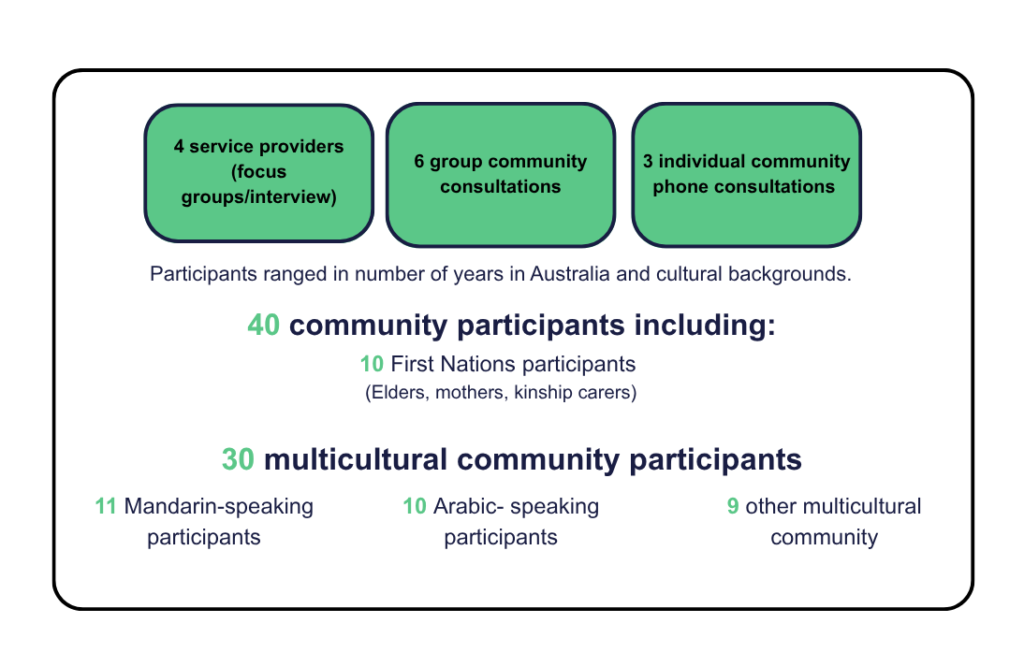
Consultations involved:
Key Findings
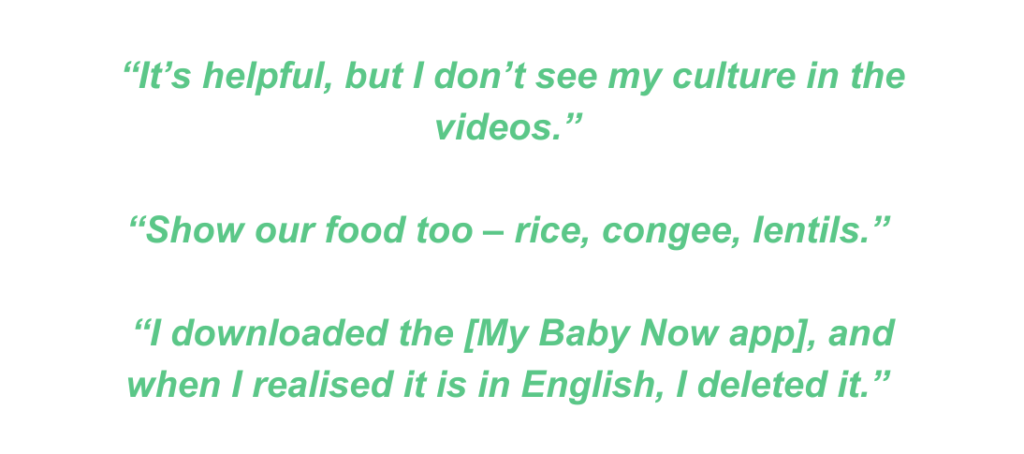
The INFANT in Darebin Project clearly shows us that families value health education and support, and that a lack of participation stems from structural factors and cultural mismatch. The project offers fresh insights into the barriers and enablers affecting participation of priority populations in the INFANT program.
Barriers
Barriers to participation included structural challenges and cultural misalignment including transport, cost, scheduling, language, and deep-rooted mistrust of mainstream services, particularly among First Nations families due to the ongoing impacts of colonisation.
Enablers
Program enablers include trust, relationships, and culturally safe, community-led spaces. Peer learning, storytelling, and informal settings were preferred, along with flexible, co-located, and integrated delivery.
Recommendations from the project
1. Models of delivery:
Creating culturally safe, community-led program delivery
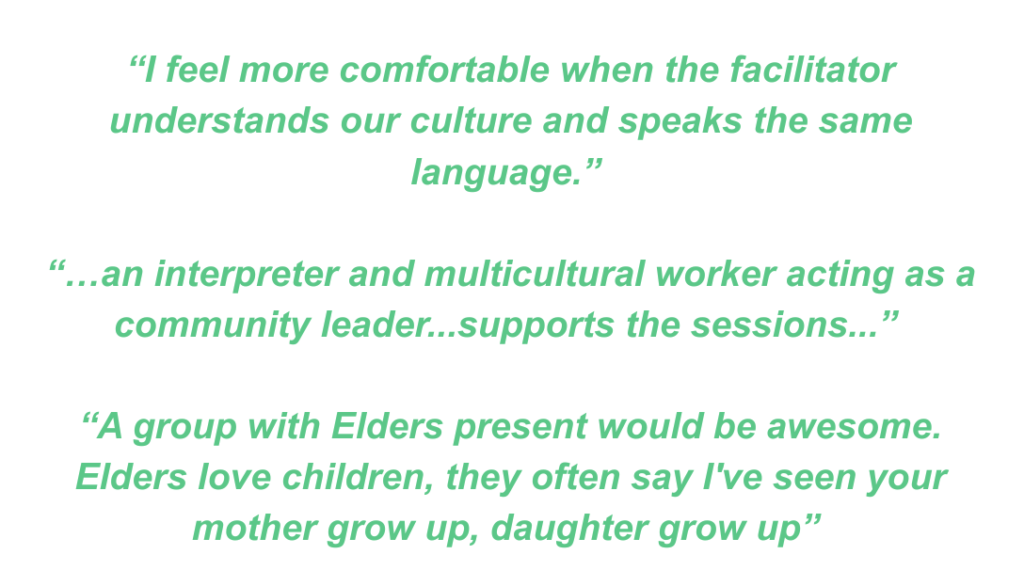
The program must be delivered by trusted people, in trusted places, using trusted languages.
This could include adapting delivery models to embed INFANT messages within trusted community settings (e.g. supported playgroups, yarning circles, culturally specific groups, social groups) and involving bicultural workers or community leaders in its delivery. For First Nations Communities, an intergenerational group with Elders and caregivers could offer a way to share in collective wisdom of raising children, strengthen kinship systems and preserve culture.
2. Cultural adaptability
Going beyond information sharing through translated resources, to co-designing and simplifying resources
For cultural adaptation, community co-design is recommended to ensure:
- Cultural relevance
- Community representation in recruitment approaches and staffing
- Content and key messages that are flexible for delivery across all ages and for caregivers
- Language that is simple and meaningful for all communities
3. Process factors for sustainable implementation
Make it practical, embedded and ongoing
Integrate INFANT messages into existing services and groups, amplifying program messages through everyday conversations. Adequate resources are required for planning and co-location, alongside practical activities, and building the capability of a bicultural and lived experience workforce.
Whats next
The project’s recommendations and learnings are grounded in community and sector feedback. By centring community voice, culture and connection, the project findings highlight opportunities to strengthen the INFANT Program for priority populations. This includes extending delivery beyond traditional health settings and embedding community-led, culturally safe prevention approaches for sustained equitable access for all families. These findings may also inform policy and practice for similar programs.
A full version of the report is available upon request.
Acknowledgement
We extend our sincere thanks to the organisations and community members who generously contributed their time, insights, culture and experiences to support this project.