People from Pacific Islander communities experience a 14–17% higher risk of diabetes compared to individuals from the general Victorian population, but culturally safe, community-led solutions could help shift the tide.
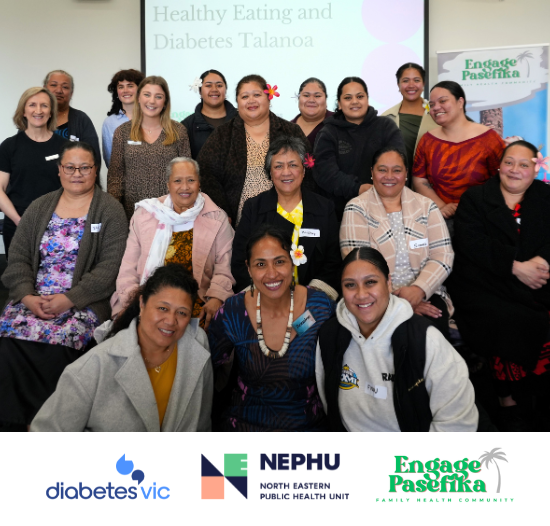
Engage Pasefika Inc., a Pacific Islander community-led organisation, and Diabetes Victoria, the state’s peak body for diabetes support and prevention, came together to deliver the ‘Healthy Eating and Diabetes Talanoa’ project.
Talanoa is a Pacific led framework for deep and meaningful exchange, discussion and learning, and facilitated a culturally responsive and community-led approach to share knowledge relating to healthy eating and diabetes.
These organisations partnered to co-design a culturally appropriate Talanoa (workshop) aimed at addressing modifiable risk factors by advancing health literacy and providing ways to address various issues around food access for Pasefika communities living in the Hume and Whittlesea local government areas.
Aims and objectives:
This project aimed to empower community members to make informed choices about healthy eating, taking into consideration financial means and cultural preferences.
This was achieved through the following objectives:
- Develop community members’ understanding of the role of healthy eating in managing and reducing the risk of type 2 diabetes and other chronic conditions using culturally adapted resources to build and support health literacy.
- Utilise co-design strategies to understand the challenges and barriers experienced within Pacific Island communities in the north-eastern Melbourne area, including food insecurity, affordability, nutrition literacy, and health system navigation.
- Gather community insights, stories of lived experiences with diabetes, and feedback from a comprehensive survey and other forms of dialogue with community members to develop a Talanoa (workshop).
- Develop resources to empower communities with knowledge and tools to incorporate healthy eating into everyday diets, reducing the risk of type 2 diabetes, supporting diabetes management.
Project implementation and delivery
Part 1: Community Survey
A comprehensive survey was developed to capture the local Pasefika community’s perspectives and priorities on healthy eating and diabetes. This survey aimed to capture the following details while ensuring accessibility and cultural appropriateness:
- Participant demographics, such as age, gender, cultural ethnicity, etc.
- Personal relationship to diabetes, including experiences of living with diabetes, and/or caring for family members or friends living with diabetes)
- Topics and activities of interest they would like to cover in the Talanoa
Further information was gathered through promotional activities, direct outreach to community leaders, email communication, and in-person engagement at the ‘Women’s Health Equity Day’ event which was attended by 150 people. These diverse community stories and lived experience perspectives directly informed the Talanoa design.
Part 2: Talanoa workshop
Twenty-four community members registered for the Talanoa, with 17 women of Samoan, Tongan, and Niuean ancestry from multiple generations. The program consisted of four main activities and components for the participants to engage in:
- Healthy eating session led by a dietitcian using culturally adapted materials and resources
- Diabetes information session led by a diabetes nurse educator using the Feltman© tool
- Movement activity led by Diabetes Victoria’s exercise physiologist, with take-home resistance bands and an exercise guide/ factsheet for participants
- Cooking demonstrations using traditional Pasefika recipes from Kokua Support Services, in line with the Australian Guide to Healthy Eating
The cooking demonstration component was a modification from the original plan to help community members develop an understanding and connection between their cultural knowledge, traditions and their learnings from the Talanoa on healthy eating and type 2 diabetes risk reduction. This component also created a culturally safe environment that helped affirm that Pasefika diets are healthy.
The resource discussion during the Talanoa informed the development of a culturally responsive, in-language, and co-created booklet available for those who attended as well as the broader Pasefika community.
Results and outcomes
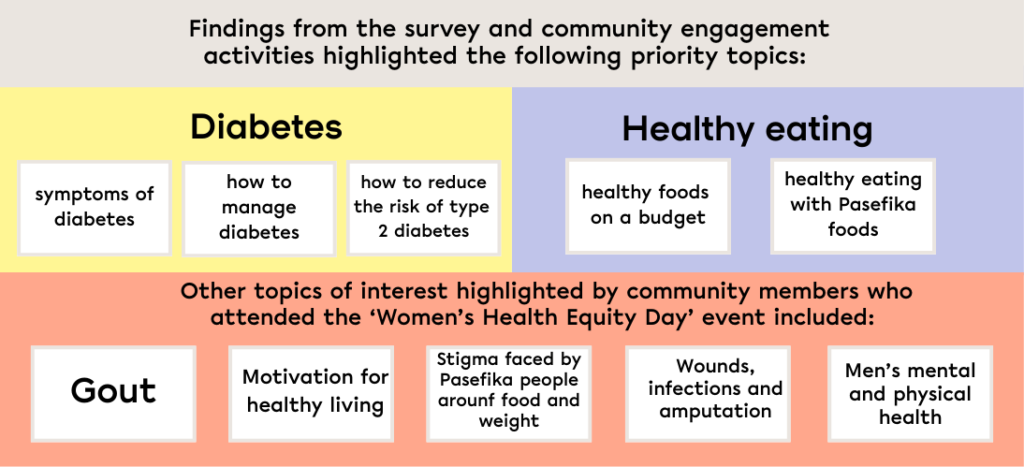
The Talanoa developed from these findings was successful as it empowered and encouraged community members to actively contribute to interactive activities, open discussion, and community-led resource development on topics directly related to their experiences and knowledge.
Nearly 80% (7 out of 9) of community members who attended on the day said they felt confident managing diabetes or supporting someone else to manage diabetes after attending the Talanoa. They also indicated that the information was easy to understand and engage with, while nearly 90% (8 out of 9) of community members highlighted that the learning experience was “very culturally relevant” and enriched by others’ lived experiences and stories relating to diabetes management and reducing modifiable risks.
The resource content and format were discussed with community members who attended the Talanoa. A booklet was found to be the preferred format and the group indicated that all topics discussed at the Talanoa should be included. They also noted the importance of having the resource translated as well as visual diagrams to ensure the information was accessible. Project leads developed a draft based on these initial discussions. An external designer was engaged to develop a final version of the booklet, including bright colours and Pasefika symbols and imagery. A translation company provided Samoan and Tongan translations. The Healthy Living booklet is available in English, Samoan and Tongan.
Lessons learnt
This project highlighted and reinforced three major learnings that could be applied in similar initiatives in the future:
- The value of co-design and co-creating: This project was conducted with the Pasefika community through collaborative approaches that were anchored in trust. All engagement preferences and cultural values were respected at every point of the project, leading to more active engagement and learning experience and reportedly higher likelihood of the resources, information and services being utilised by community members.
- Cultural Safety and responsiveness: The leaders of this project placed significant emphasis on Pasefika ways of knowing and doing, while directly co-leading with community members to honour nuances of Pasefika cultural practices like Talanoa and prayers by the Elders. This created a culturally safe space for all community members while respecting the position held by the Elders as influential members of the community.
- Empowerment through meaningful engagement: The Talanoa demonstrated that when communities feel empowered, they take ownership of their health outcomes. Future heath projects should focus on creating spaces where community lived experiences are at the forefront, especially complex health issues like diabetes.
- Gap in accessing language resources: Feedback from community members emphasised the importance of prioritising culturally responsive resource sharing, particularly those in-language, as diabetes materials in Pacific languages are limited. Community members commended the value of translated and culturally adapted factsheets from New Zealand, demonstrating the need and effectives of accessible resources to promote health equity for Pacific communities.