Women in Victoria continue to face multiple barriers to achieving adequate Sexual and Reproductive Health (SRH) care. These must be addressed by strengthening services to ensure they are culturally safe, appropriate, accessible, and responsive to diverse women’s needs.
Women’s Health East (WHE) is a women’s health promotion agency working across the Eastern Metropolitan Region of Melbourne. They function as capacity builders for organisations, services and programs to optimally address issues affecting women in the region.
According to the Victorian women’s sexual and reproductive health plan 2022–30, women in Victoria continue to face multiple barriers to achieving adequate SRH care. These barriers include stigmatisation, financial constraints and limited access to culturally appropriate services, which particularly impact several priority groups, including older women, women with disabilities, culturally and linguistically diverse women.
Project aim and objectives:
The project aimed to improve SRH outcomes for women from priority and underserved populations in Melbourne’s east by:
- Addressing systemic barriers
- Amplifying lived experiences
- Building the capacity of health professionals and service providers to better understand women’s SRH needs and support them to access culturally appropriate, accessible healthcare and services
Implementation and delivery:
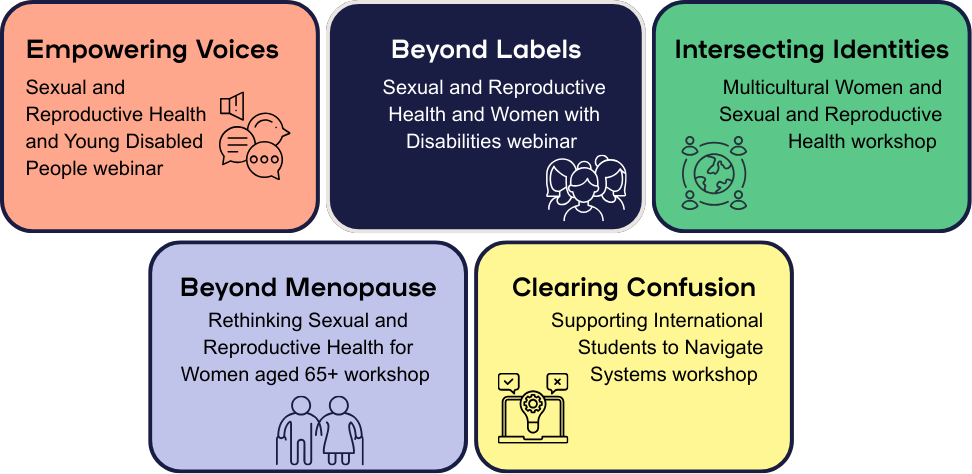
WHE delivered a series of five tailored workshops, two online webinars and three in-person workshops, which were co-designed with women with lived experience and working in collaboration with different partner organisations.
The topics covered included:
To integrate lived experience, nine women with lived experience participated in co-design planning meetings while also speaking as panelists during the workshops. Attendants also had the opportunity to provide feedback for evaluation.
Project outcomes and achievements:
The workshops engaged a total of 86 attendees, with 53 participating in the evaluation which showed significant changes in the attendees’ understanding of SRH as a public health issue.
Of those who completed the evaluation, 80% reported an increased confidence to apply knowledge of women’s SRH in their work. Attendees reported increased confidence to apply SRH and intersectionality in their programs and practice. They reported feeling more equipped with knowledge and capacity to support priority populations to access culturally appropriate, accessible healthcare and services.
Anecdotal evidence also showed participants greatly appreciated the workshops raising awareness of topics which are often not spoken about.
Lessons learnt:
Due to the sensitivities associated with this topic, WHE faced challenges in recruiting lived experience experts to share their stories as many were hesitant to participate. Although this was addressed by engaging with trusted local networks and encouraging participation from women involved in other initiatives, it also reinforced the value of building trust and collaboration with women with lived experience and partner organisations for engaging priority groups.
Although in-person workshops promoted active engagement, online workshops provided greater flexibility, allowing participation from various locations. The mixed format ensured as many people could benefit as possible.
Overall, this project provided stakeholders and community groups the opportunity to engage, network and strengthen relationships together and with women of various backgrounds and abilities.