Aboriginal communities hold strong knowledge systems that connect food, culture, and wellbeing.
There is a shared aspiration to strengthen connections to traditional food practices and improve access to fresh, healthy, and culturally meaningful foods. By building on this knowledge and community leadership, meaningful opportunities exist to support long-term health and wellbeing.
In recognition of the importance of Aboriginal women’s leadership in food, culture, and family health, Your Community Health (YourCH) partnered with Aboriginal women to deliver Naarm Tiddas, a community-led cooking and nutrition program. The project was supported through NEPHU Priority Population Grant funding.
Aim
The program aimed to empower Aboriginal women with the skills, knowledge and community connections to prepare nutritious meals grounded in their cultural traditions.
Program design and planning
The program commenced with an initial co-design process with 26 Aboriginal community members, including a yarning session and online survey. This feedback captured the community’s felt needs, enablers, barriers, and suggestions, directly shaping the program. Participants asked for practical cooking classes that were fun, social, and culturally meaningful, incorporating:
- Bush foods and traditional cooking methods
- Family-friendly recipes
- Guidance on budgeting and meal planning
- Intergenerational culinary knowledge exchange
Program activities and results
Twenty-three participants attended the program, which included:
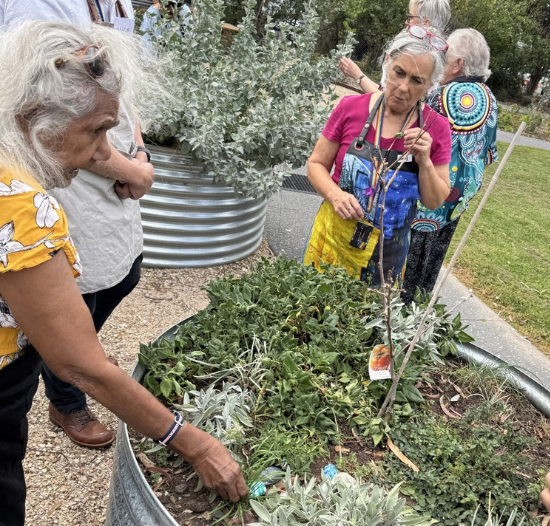
- Six cooking workshops – using local sourced food and native bush foods from YourCH’s wulempuri barring garden and participants’ chosen recipes
- Three nutrition education sessions – covering healthy eating principles, managing food allergies, and understanding the “Go, Grow, Glow” food groups
- Two intergenerational cooking circles – bringing together Elders, adults, and children to share culinary knowledge, stories and cultural practices.
Participants were actively involved in shaping the content, selecting recipes, and sharing their skills. The project also produced a hard copy and e-cookbook, featuring:
- Recipes and nutrition information
- Participant artwork and photos
- Educational materials from sessions
Participant reflections following the program
Evaluation using pre- and post-project surveys, journals, and observation highlighted that participants gained:
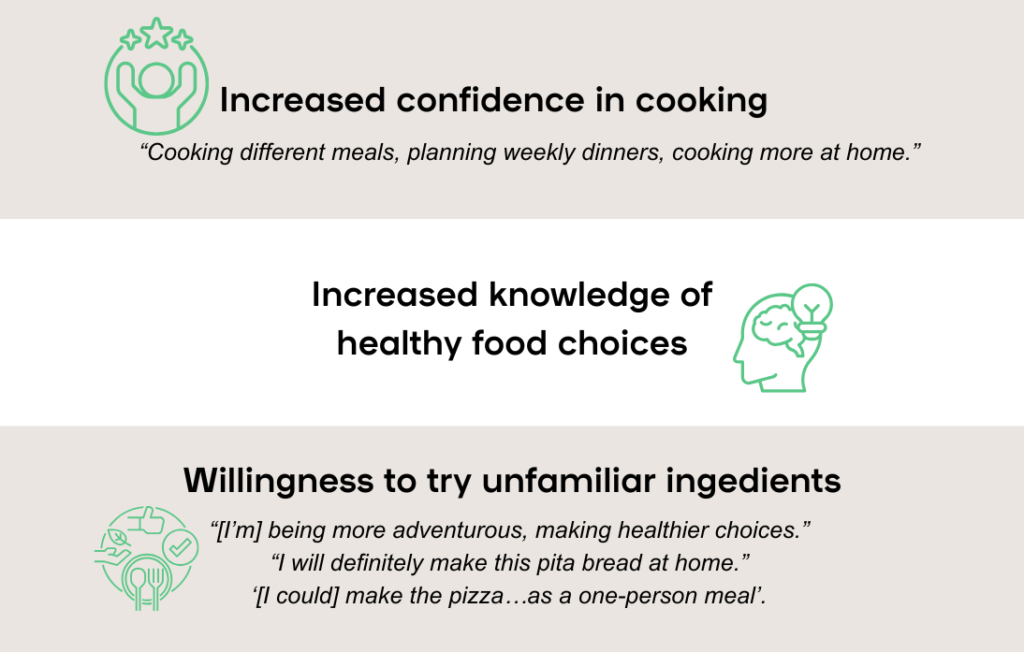
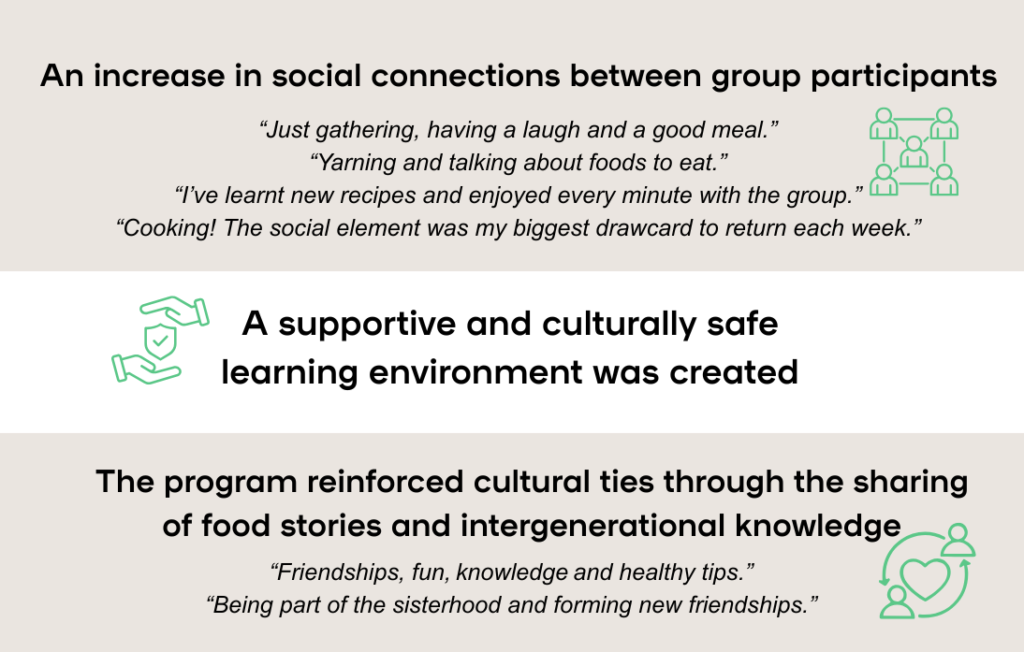
Evaluation of the project also found:
Key success factors
Key factors supporting the program’s success included:
- Aboriginal staff engagement and community networks
- Flexible, participant-led sessions
- A hands-on approach and high staff-to-participant ratios
- Incorporation of co-design feedback to ensure cultural relevance
- A safe space to build relationships with YourCH dietitians and other staff, fostering trust in the service
- Program design fostered a combination of practical skills, nutrition knowledge, and social and cultural connection.
Looking ahead
All participants expressed enthusiasm for ongoing cultural and health-related activities, including participating in a co-design group to plan future programs with and for local Aboriginal community members.
The program was a partnership between the YourCH Aboriginal Health, Community Programs, and Dietetic teams. With the success of this pilot, YourCH are continuing Naarm Tiddas, which is a great outcome.