Measles is a highly infectious viral illness that is spread through droplets when an infected person coughs and sneezes.
Measles can cause serious illness and complications however, it is preventable with immunisation.
Symptoms include:
- Fever
- Cough
- Runny nose
- Swollen lymph nodes
- Koplik spots which can be small white, grey or red spots inside the mouth
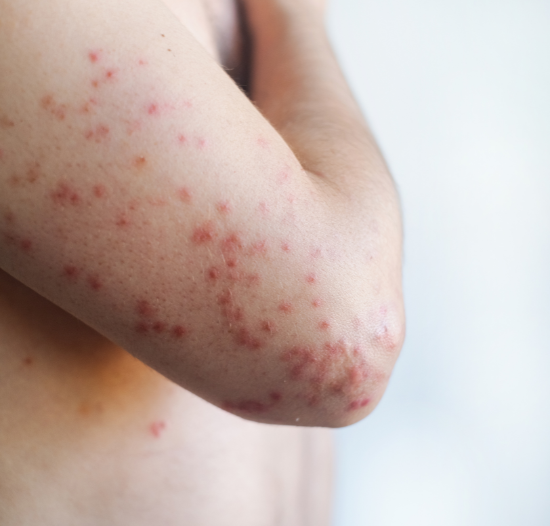
- Red blotchy rash usually starting on the face or neck
Sometimes, measles can cause serious complications including:
- Ear infections
- Diarrhoea
- Pneumonia or other respiratory infections
- Encephalitis which is inflammation of the brain
In very rare cases, complications can take several years to develop.
Who is most at risk of getting measles?
While measles is still uncommon in Australia, there is an ongoing risk of measles in travellers returning from overseas with outbreaks occurring in a number of countries globally.
Anyone can catch measles if exposed. People who have not had two doses of a measles-containing vaccine or have not had measles previously are at an increased risk of measles.
People who are at increased risk of severe complications or symptoms include:
- Babies and children under 5 years
- Pregnant women
- People with a weakened immune system
How can you protect yourself from measles?
Getting vaccinated is the best protection from getting infected with measles and spreading it to other people. Two doses of a measles-containing vaccine is recommended to protect against measles.
Anyone who was born after 1965 and has not had TWO measles vaccines is at risk of infection and should get a free measles vaccine, especially before overseas travel. Free measles vaccine is widely available at GPs, community pharmacies, Aboriginal Health Services and some local councils. Call ahead or check the service website to confirm availability and if there are any out-of-pocket administration costs.
Children are currently recommended to be given a measles-containing vaccine at 12 and 18 months of age as part of the National Immunisation Program Schedule. However, the second measles dose was only added to the National Immunisation Program Schedule in 1992. Therefore, people born between 1966 to 1992 should check that they have had a second catchup dose. If you have lost your childhood vaccination record or are unsure of whether they have had two doses, you should get a vaccine as additional doses are safe.
Babies aged 6 to 12 months travelling to countries with measles outbreaks should get an extra measles vaccine before they go.
There are two types of measles-containing vaccines available including:
- The combined measles, mumps and rubella (MMR) vaccine
- The combined measles, mumps, rubella and varicella (MMRV) vaccine
Check if you have been vaccinated via:
- Personally held records (e.g. babybooks or handheld vaccine cards)
For professionals
Primary care practices are encouraged to offer free state-funded catch-up MMR vaccine to all adults born on or after 1966 who are missing two doses of MMR or are unsure of immunity.
Free state-funded MMR vaccine can be ordered through Onelink.
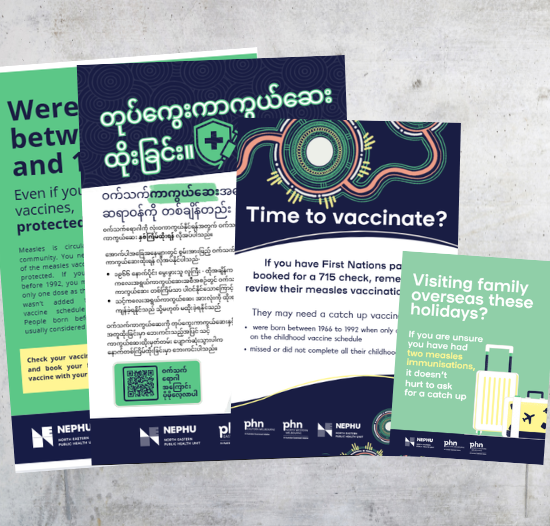
Resources promoting catchup measles vaccination can be found here. Free posters are available for clinics located in the NEPHU catchment.
Suspected measles cases should be tested, advised to isolate (airborne precautions), and MUST be notified immediately to the Department of Health by calling 1300 651 160.
Clinicians should obtain both a throat swab for PCR and a serum sample for serology. PCR on urine can also increase the likelihood of virus detection. Mark as ‘urgent – send to Victorian Infectious Diseases Reference Laboratory (VIDRL)’.